
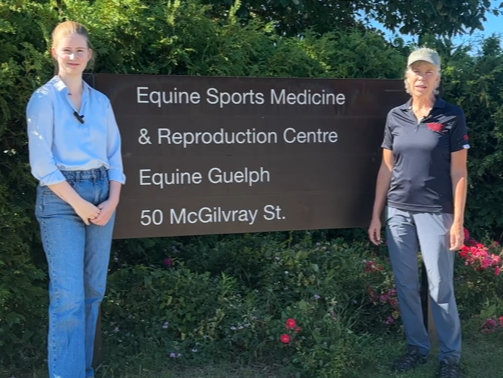
At the University of Guelph, students in the Equine Management program learn by caring for horses every day. That includes weekends, holidays and school breaks—and making sure the horses’ needs come first.
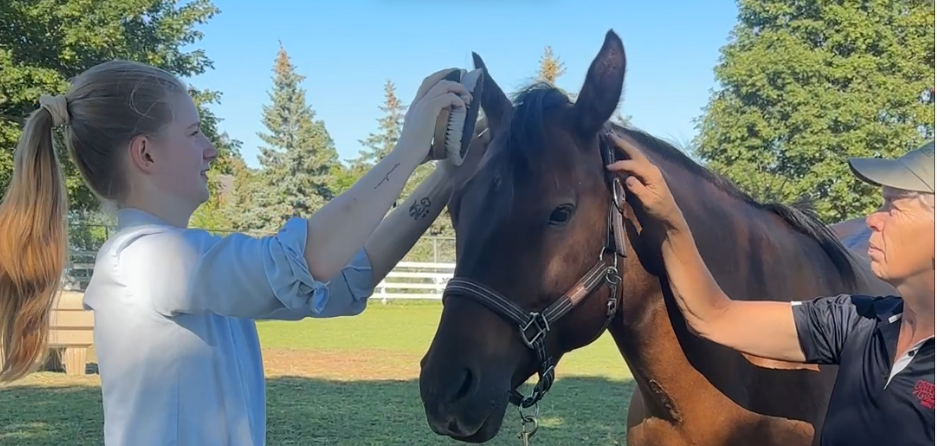
Dr. Katrina Merkies, a professor in the Department of Animal Biosciences at the Ontario Agricultural College, oversees the program. A graduate of the same program, Grace Godere manages the university’s teaching horses at the Equine Sports Medicine and Reproduction Centre while completing a master’s degree in equine cardiology.
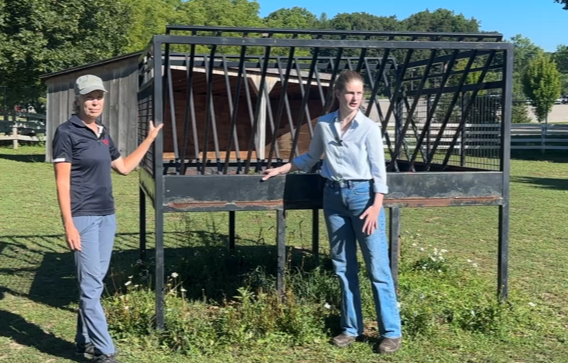
That hands-on work helped Dr. Merkies and Grace identify a challenge with the horses’ original hay feeders. The large, fixed feeders required a tractor to move and refill, which damaged the paddock footing. Hay was pulled onto the ground, trampled into mud and wasted—Grace estimated that at least 20 per cent could end up uneaten. Rain also left hay damp in the feeders; causing it to spoil.
There was a more serious concern, too. With hay held overhead, pieces could fall into the horses’ eyes and cause corneal ulcers. That was especially worrying for horses with only one healthy eye.
The team needed a portable feeder that was safer for the horses, reduced waste and better supported natural grazing. The Hay Optimizer offered a practical solution.
A more natural way to eat
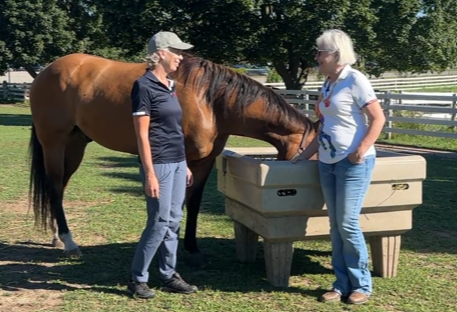
With the Hay Optimizer, horses eat with their heads down in a position that more closely resembles grazing. Grace says this is more physiologically appropriate and helps protect their eyes from falling hay.
The adjustable netting also lets the team tailor access to each horse. For Rooster, an easy keeper, smaller openings help manage his body condition. Horses that need more forage can use larger openings, particularly in winter. When heavy snow might cover the net, staff can open it so horses can still reach the hay.
The feeder holds two small square bales side by side. Students can bring the bales over in a wheelbarrow and refill it without bringing a tractor into the paddock. Drainage holes help keep hay from becoming damp, and the lightweight design makes the feeder easy to move.
Supporting horses and the paddock
Because the feeder can be moved daily, students can shift it away from wet or heavily used areas. This helps protect the ground from becoming muddy and gives the paddock a chance to recover. Grace says areas that had been bare and muddy have since grown some grass again.
For the students, caring for the horses is also a chance to learn with equipment they may encounter in their careers. They use the feeders as part of their daily routine and can take that experience with them into barns beyond the university.
Dr. Merkies first met the Hay Optimizer team at the International Society for Equitation Science conference hosted at the University of Guelph in 2019. At the time, the product was still being developed, and its creators were seeking feedback from equine scientists around the world to help make it safe, durable and effective.
Having the feeders at Guelph brings the story full circle: a local business developed a product that now supports the university’s teaching horses and gives students a hands-on example of how thoughtful equipment choices can benefit horses, their environment and the people who care for them.
